Metal Roof Installation in Temple, TX: Every Step, and Where Most Crews Get It Wrong
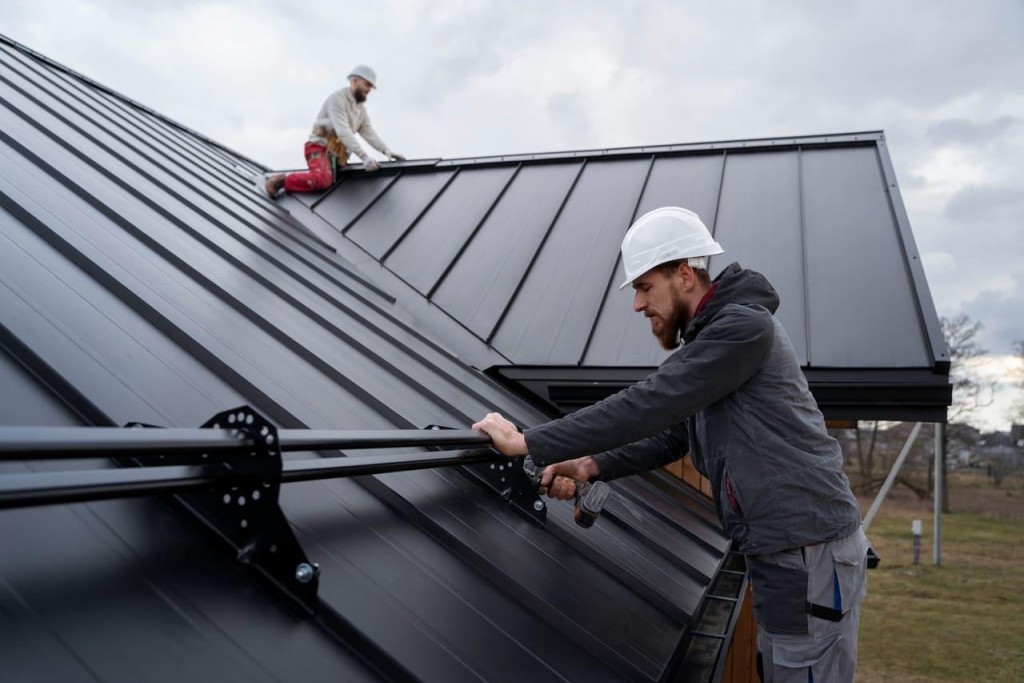
Metal roof installation in Temple, TX, follows a clear sequence: inspection, tear-off, underlayment, panel placement, flashing, and final check. SP Construction LLC handles each step for residential homes across Temple, Belton, and surrounding Central Texas communities. Most jobs wrap up in one to three days.
Key Takeaways
-
Metal roof installation follows a defined sequence. Skipping steps leads to leaks and early failure
-
Synthetic underlayment outperforms felt in Central Texas heat
-
Standing seam and exposed-fastener systems carry different maintenance needs
-
Flashing is where most installation failures start
-
A local contractor catches problems that an out-of-town crew won't
What Happens Before Installation Even Starts?
Roof Deck Inspection
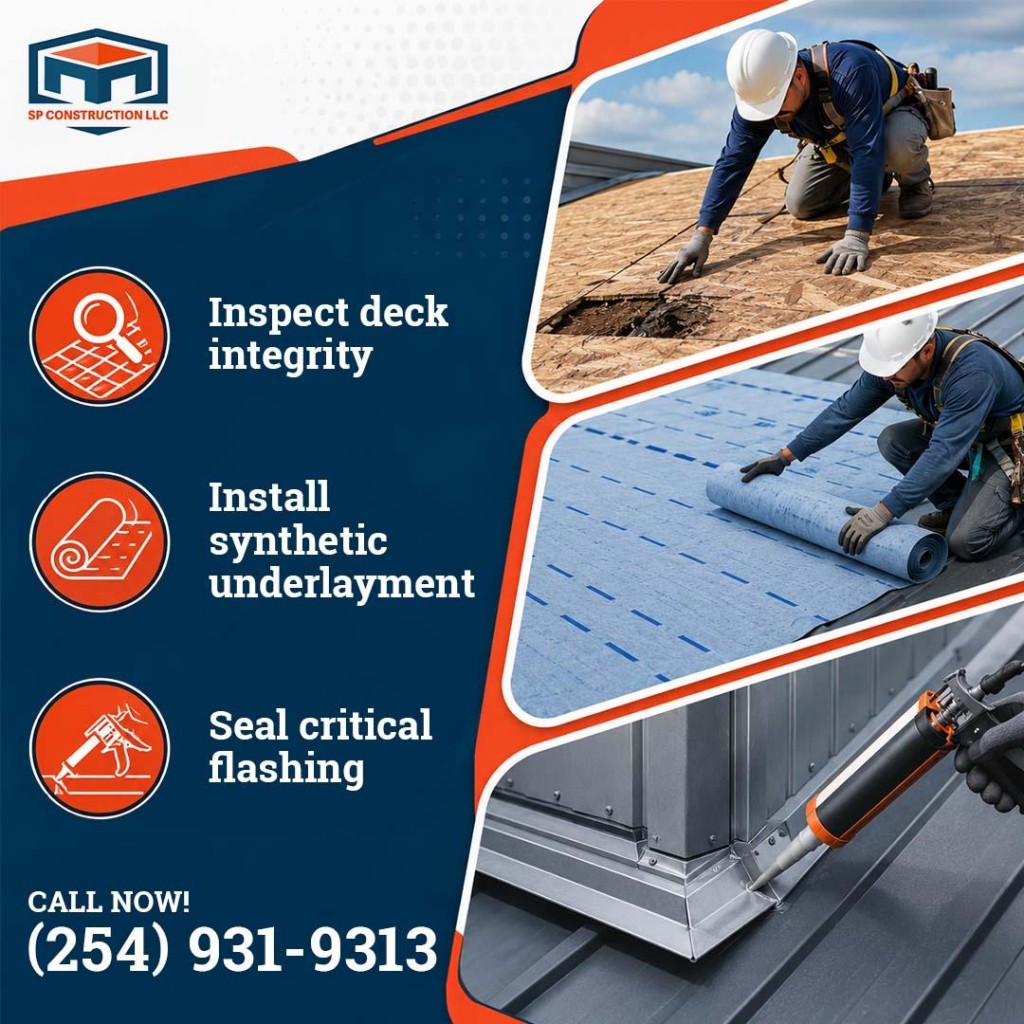
We initially check the decking for rot, soft spots, and structural issues. Metal roofing is only as solid as what it sits on. A compromised deck that goes undetected shows up within a few years as leaks around fasteners or panels that won't lie flat.
Permit and Measurement
Metal roof installation in Texas requires a building permit in most municipalities, including Temple. We handle that before scheduling. Metal panels are cut to fit, so measurement errors mean wasted material and delayed timelines.
How Is a Metal Roof Actually Installed?
Tear-Off vs. Overlay
Most installations start with a full tear-off. Installing metal over shingles saves on disposal costs but carries a risk. Trapped moisture between layers can cause the deck to deteriorate from underneath with no visible warning signs outside.
Underlayment Selection
Synthetic underlayment holds up better than felt in Central Texas heat. Felt can dry out and crack under metal panels, which get extremely hot in summer.
Panel Placement and Fastening
Standing seam and exposed-fastener systems differ at this stage:
-
Standing seam panels interlock at raised seams and fasten beneath the surface. No fastener is exposed to weather, so maintenance needs are lower over time.
-
Exposed-fastener panels are faster and less expensive to install, but rubber washers degrade and need periodic inspection.
Flashing and Trim
Flashing seals the gaps where metal meets chimneys, vents, walls, and roof edges. Most installation failures start here. Poorly installed flashing lets water travel behind panels and into the decking before any damage appears on the interior ceiling.
What Should You Watch for After Installation?
The Initial Rain Test
The initial rain test serves as a critical diagnostic inspection to evaluate the performance of a new installation. While a properly fitted system is designed to manage moisture effectively, observing the roof during its first heavy rainfall allows us to identify any alignment or flashing concerns, such as minor drips near vents or skylights, that may require adjustment to ensure long-term stability.
Warranty Documentation
Your metal roof carries two warranties: one from the panel manufacturer and one for our workmanship. Keep both on file. Manufacturer warranties cover the panel coating. Our workmanship warranty covers how the system was installed.
FAQs
How is metal roof installation different from shingle installation?
Shingles are nailed in overlapping rows from the bottom up. Metal panels are measured, cut, and set in runs from one edge to the other. Metal requires more precision and specialized tools, but the finished system has fewer components that can fail.
What happens if a metal panel gets damaged after installation?
Individual panels can be replaced without touching the rest of the roof. We assess whether a repair or section replacement is the right call based on where and how the damage occurred.
Get a Free Roofing Estimate in Temple, TX
When it's time to replace your roof, hand the job to someone who'll still be in Temple after it's done. If you're searching for metal roofing near you , call SP Construction LLC at (254) 931-9313 or email Sherrie.Spconstructionllc@gmail.com to schedule an inspection.